Hey there, so you’re deep in the market for servo motors and keep seeing those two big acronyms—AC and DC—floating around, but you have zero clue what actually sets them apart, right? I get it, I’ve been talking to industrial designers, automation engineers, and small business owners every single day since I started at this servo motor supply gig, and more than half of ’em admit they mix these two up all the time. Today, I’m gonna break this down like I chat with my team over coffee—no stuffy engineering jargon, just the real, practical stuff that actually matters when you’re buying one for your machine, robot, or whatever you’re powering. Servo Motor
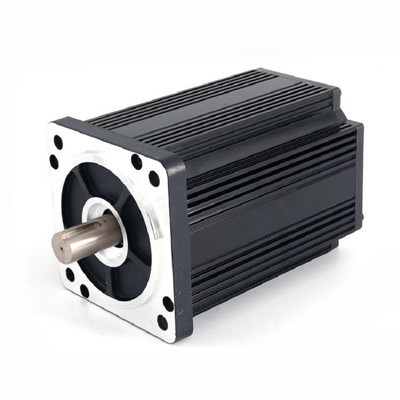
First off, let’s get the basics out of the way super quick, no boring textbook definitions. AC stands for Alternating Current, DC is Direct Current. That’s the electrical juice that powers each, but that tiny difference ripples through every part of how these motors work, perform, and fit into your setup. Let’s start with DC servo motors because they’re the OG, the ones that got automation rolling back in the day. Back when robots were clunky and factories just started putting assembly lines on auto, DC servos were the go-to. How do they work? They have a permanent magnet on one side (the stator, if we wanna get nerdy) and a rotating part (the rotor) with coils of wire. When you send DC power through those coils, it creates a magnetic field that pulls and pushes against the permanent magnet, making the rotor spin. And here’s the thing that made DC so popular back then—speed control is way smoother if you tweak the voltage. Crank up the voltage, faster spin; turn it down, slower. That’s a big win for applications that need super precise, adjustable speed, like old CNC mills or small robotic arms.
But wait, there’s a catch with DC servos. Those coils on the rotor mean there’s a little switch called a commutator and brushes that slide against it to flip the current direction as the rotor spins. Yeah, those brushes and the commutator—they wear out. Fast. If your machine runs 24/7, you’re gonna be replacing brushes every few months, maybe even every week if it’s high-cycle. That’s downtime, that’s extra cost for parts and labor, not to mention the tiny bits of carbon dust from the brushes that can mess with sensitive electronics in your setup. I’ve had a customer come to us last year because their old DC motor was spitting carbon all over their circuit boards, costing them $5k a month in repairs alone. Ouch.
Now AC servo motors, the newer kid on the block that’s taken over most of the industrial space now. No brushes, no commutator—so how do they flip the current? Oh right, they use electronics (we call them drives, but everyone just says “drives” around here) to switch the current direction for you, no physical parts wearing out. That’s a game-changer for longevity. The rotor on an AC servo is usually made of aluminum or copper, no coils in it—so less moving parts that can break. Speed control on AC servos is actually better too, if you get the right drive. Modern AC drives can adjust frequency super precisely, so you get way more consistent speed at super low RPM, which is perfect for things like packaging lines where you don’t want a bottle coming out lopsided because the motor speed dipped.
But wait, hold on—AC servos do have their own quirks, right? The drives aren’t cheap. Back in the day, an AC drive was way more expensive than a DC speed controller, but the gap’s gotten smaller lately. If you’re a small shop with a tiny budget, that upfront cost might make you hesitate, but you have to weigh it against less maintenance. Also, AC motors can be a bit bigger for the same power output as a DC? No, wait, actually no—they’re often smaller, but the drive adds to the footprint a little. But for most modern applications, that tradeoff is worth it.
Let’s talk about where each actually shines, because that’s what most people miss. You don’t just pick one because it’s newer—you pick it for your specific use case. DC servos are still great for small, low-cycle applications where maintenance is easy to do and upfront cost is king. Like a small test rig in a lab that runs a couple hours a day, or a hobbyist robot that only gets used on weekends. Yeah, you’ll have to replace brushes, but if that’s once a year and it takes 10 minutes, no big deal.
AC servos, though? They’re the workhorses for almost any industrial, high-cycle setup. Think of big packaging lines that run 24/7, automotive assembly robots, medical equipment like MRI machines or insulin pumps (wait, yeah, those tiny precise motors in medical gear are almost always AC now), even drone motors? No, wait, drone motors are usually brushless DC, but that’s a subset I’ll get to later. Oh right, brushless DC is a thing, sometimes called BLDC, and people mix that with AC all the time. Quick note: BLDC is technically DC because it uses DC power, but it has no brushes, so it’s way longer-lasting than old brushed DC. But it’s different from AC, which uses alternating current from the grid (or your drive converting DC to AC).
Another big difference people care about: torque. Torque is the twisting force that makes your machine do work, right? DC servos have really high starting torque—meaning they kick with a lot of force the second you turn them on. That’s great for applications that need to move a heavy load from a standstill, like a robotic arm lifting a 50lb part. AC servos have good torque too, especially modern ones, but their starting torque is a bit lower than brushed DC. Wait, but BLDC is up there too—so that’s why the line’s a bit blurred here. But for heavy, instant loads, old DC brushed still has an edge, but AC is closing that gap fast.
Efficiency is another one. No brushes mean AC servos waste less energy from friction and sparking. That translates to lower electric bills over time, and less heat build-up. If you’re running a motor in a closed space, heat is a big problem—extra heat can shorten the life of other parts around it. I had a customer in the food and beverage industry who switched from DC to AC servos a couple years ago, and their electricity bill dropped by 18% in the first year, plus they didn’t have to run extra cooling fans for the motor cabinet anymore. That’s a win-win.
Wait, let’s address a common myth I hear all the time: “AC is always better than DC.” No way. If you’re a small business making custom parts in a 1000 sq ft shop, and you only need a motor that runs your small lathe a few hours a day, a DC servo is probably cheaper upfront and does the job just as well. The AC drive alone might cost more than the whole DC motor setup you need. But if you’re running a 24/7 operation with no time for downtime, the extra cost of an AC servo will pay for itself in 1-2 years, easy.
Also, let’s talk about control. Both give you precise position and speed control, which is why they’re called servos (they “serve” a specific position or speed command from your controller). But AC servos work way better with modern automation systems, like PLCs or IoT setups. You can connect an AC drive right to your network, monitor its performance in real time, get alerts if it’s about to fail, even adjust settings remotely. DC servos are more of a “set it and forget it” thing, hard to integrate with today’s smart factory tools. That’s a huge deal if you’re looking to upgrade your facility to Industry 4.0.
I should also mention size and weight, because that matters for mobile applications. If you’re building an autonomous mobile robot (AMR) that needs to move around a warehouse, weight is everything. AC servos are often more compact for the same power, so you can get more torque in a smaller package. DC servos, even BLDC, are catching up, but for high-power mobile use, AC usually has the edge.
Wait, but what about noise? Brushed DC servos can be a bit noisier because of the brushes sliding against the commutator—you get that little whine or buzz when they’re running. AC servos are almost silent, because no physical parts are rubbing together. If you’re working in a quiet environment, like an office or a medical lab, that’s a big plus.
Let me wrap this up with some real takeaways, ’cause I don’t want you to leave here more confused than when you started. First, figure out your use case: is it high-cycle, 24/7 industrial? Go AC. Is it low-cycle, small-budget, easy to maintain? DC is fine. Second, don’t fall for the “newer = better” trap—newer doesn’t always fit your needs. Third, think about long-term costs, not just upfront. That $200 DC motor might seem cheaper than the $500 AC setup, but if you’re replacing the DC every 6 months and paying for brushes, labor, and repairs, the AC will be cheaper in a year.
And hey, if you’re still stuck, that’s what we’re here for. I’ve worked with engineers, shop owners, startup teams, even hobbyists, and I can help you sort through what’s right for your specific project. No pressure, no pushy sales talk—just real advice based on what’s actually worked for our customers. We’ve got stock on both AC and DC servos, all sizes from tiny 10W ones for small robots up to 10kW for big assembly lines, so whatever you need, we can get it to you fast.
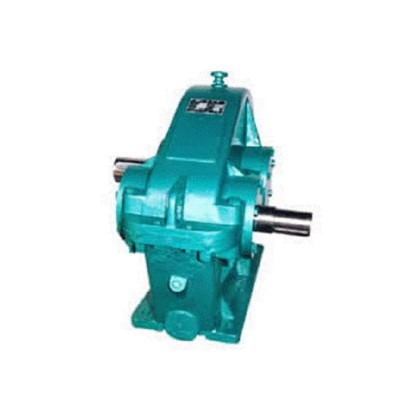
So if you’re ready to stop guessing and pick the right servo for your machine, reach out to us. We can send over specs, answer all your weird little questions, even help you size the motor if you’re not sure. No jargon, no fine print—just straight talk about servo motors.
Gear Motor References:
- Bolton, W. (2017). Electrical Machines and Drives. Pearson Education Limited.
- "AC vs DC Servo Motors: A Practical Guide." Motion Control Tips, 2022.
- Miller, T.J.E. (2008). Brushless Permanent-Magnet and Reluctance Motor Drives. Oxford University Press.
- Industrial Automation Society. (2021). Servo Motor Selection Handbook. International Society of Automation.
Zibo Auric Mechanical and Electrical Technology Co., Ltd.
As one of the leading servo motor manufacturers and suppliers in China, we warmly welcome you to buy advanced servo motor for sale here from our factory. All customized motors are with high quality and competitive price.
Address: B419, High-tech Entrepreneurship Park, High-tech Zone, Zibo City
E-mail: cui@auricmotor.com
WebSite: https://www.auricmotor.com/
