Hey there, if you’ve ever shopped for building materials, you’ve probably stumbled across EPS sandwich panels—they’re super popular for everything from warehouse walls to portable office partitions, right? But let’s be real, when you’re picking materials that’ll affect how a space sounds, you start asking all the random questions no sales rep is gonna bring up first. I’m the guy who’s been supplying these panels for the last 12 years, so I get it—you don’t just wanna hear a generic “it absorbs sound” line. You wanna know the actual numbers, what they mean for your project, and if this stuff’s actually gonna help you stop hearing your coworker’s phone ring through a partition or that annoying echo in a new break room. Today we’re breaking down the acoustic absorption coefficient of EPS sandwich panels, no fluff, just real talk from a guy who’s shipped way too many of these to count. EPS Sandwich Panels
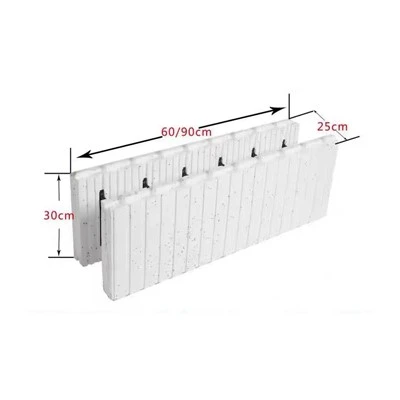
First off, let’s get the basics straight for anyone who’s not an acoustics nerd—acoustic absorption coefficient (we just call it the alpha value, tbh) is a number between 0 and 1. 0 means sound bounces 100% off the surface (like a concrete wall), 1 means it absorbs 100% of the sound (that’s like a super thick soundproof panel in a recording studio). Everyone wants a high alpha, but here’s the thing: it’s not one-size-fits-all. The alpha for EPS panels doesn’t just magically stay the same—it changes based on how thick the panel is, what kind of facing you put on it, and even what frequency of sound you’re dealing with. For anyone who’s ever dealt with echo in a big open space, frequency matters. Low frequencies (like that deep rumble from a HVAC unit or a bass speaker) are way harder to absorb than high frequencies (chatter, phone calls, door slams). That’s why you’ll see different alpha numbers listed for different Hz ranges—usually 125Hz up to 4000Hz, the range that makes up most of the sound we hear day to day.
So what’s the actual number we’re seeing with EPS sandwich panels? Let’s cut to the chase: typical EPS panels (the standard ones we supply, with a 50mm to 100mm thick polystyrene core and a plain steel facing) have an average alpha value of around 0.3 to 0.5 in the mid to high frequencies (500Hz to 2000Hz). Wait, hold on—before you go “that’s low,” let’s compare that to what other common building materials have. A standard drywall partition is around 0.25 to 0.3 in the same range, so EPS is actually doing a little better. Concrete? We’re at 0.1 here, basically a sound mirror. So EPS isn’t going to replace the specialized acoustic panels you put in a home theater, but it’s way better than regular walls for cutting down on echo and mild noise transfer. Now, if you tweak the panel, you can bump that alpha up a lot. For example, if we add a perforated steel facing instead of a smooth one, that alpha jumps to 0.5 to 0.7 in the mid frequencies. Why? The tiny holes let sound waves get into the EPS core, which traps and dissipates the sound energy. That’s a game-changer for spaces like busy retail stores or open plan offices where you don’t want total silence, just no one hearing someone else’s conversation.
Let’s talk about what affects this number the most, because if you’re buying panels, this is the stuff that’ll change how they work for your job. First, core thickness—this is the biggest variable. We supply EPS panels with cores from 20mm up to 150mm, and every 50mm adds a small bump in alpha. A 50mm plain core panel averages 0.35 alpha at 1000Hz, a 100mm plain core hits 0.45 in the same range. That makes sense, right? More EPS means more material to trap sound waves as they pass through the panel. Then there’s the facing material, like I mentioned earlier. Smooth steel is the cheapest and most durable, but it blocks most sound from getting into the core—hence the lower alpha. Perforated facing lets sound through, but we have to make sure the hole size and spacing are right. If holes are too big, the facing loses structural strength; too small, and sound can’t get through. We test every perforated facing panel we ship to make sure it’s balanced. There’s also vinyl facing, which is sometimes used for food processing facilities. It’s a little smoother, so it only adds a tiny bit to the alpha compared to plain steel, but it’s way easier to clean, so that’s why customers pick it for specific jobs.
Another big one is installation. You could have the best EPS panel in the world, but if you install it wrong, it won’t absorb sound right. The air gap behind the panel is huge. If you mount the panel directly to a concrete wall with no gap, the alpha drops by 0.1 to 0.2, because the sound waves bounce off the concrete instead of moving through the EPS. If you leave a 50mm to 100mm air gap between the panel and the existing structure, that adds another 0.15 to the alpha value. We always tell our customers: if you want better acoustic performance, don’t skip the air gap. It’s free, it just means using a few longer screws, and it makes a noticeable difference. We had a client a few years back who was putting up a small call center and tried to skip the air gap to save a little time. When they tested the space, the alpha was way lower than they expected, so they had to go back and add the gaps after installation. End result? They still loved the panels, but they learned the hard way how much installation affects performance.
Wait, let’s clear up a common misconception here—people mix up acoustic absorption coefficient with sound transmission loss (STL), and they’re totally different. Alpha is about how much sound gets absorbed by the panel itself, STL is about how much sound gets through the panel to the other side. EPS panels have good STL for their weight—better than drywall, actually— but that’s a whole different number, and people often confuse the two. I’ve had so many calls from customers saying “your EPS panels have 0.7 alpha, that’s bad at blocking noise” and I’m like, no, that’s absorbing sound in this room, STL is what stops the next room from hearing it. Important distinction, and I make sure every client I talk to gets that sorted out right away.
So when would EPS sandwich panels work best for acoustic purposes? Let’s give some real examples of jobs we’ve supplied for, because that’s way more useful than just numbers. First, small to medium warehouses. Warehouses are echoey as hell, right? Every forklift beep and metal clang bounces off the concrete floors and walls. We used to recommend plain steel facing EPS panels with 100mm cores and a 50mm air gap for these, and their average alpha at 1000Hz jumps to 0.5, which cuts that echo by like 30%—way more than the old concrete walls they had before. Another one: portable classrooms or temporary office spaces. These need to be durable, fast to install, and cut down on chatter between rooms. Perforated facing EPS panels here hit 0.6 alpha, which is perfect for that. We had a school district order these a couple years back for their portable units, and the teachers said the noise level in between rooms dropped so much they didn’t have to yell over each other anymore. Then there’s retail spaces—like clothing stores or coffee shops. These want a little echo to make the space feel open, but not so much that you can’t hear your own thoughts. The perforated panels we supply hit 0.55 to 0.65 alpha, which is exactly what they need.
When would you not use EPS panels for acoustic stuff? If you’re making a recording studio, or a home theater where you need near-total soundproofing, EPS isn’t gonna cut it alone. For those spaces, you’d pair EPS with a thicker layer of acoustic insulation, or use specialized mass-loaded vinyl barriers. But for 90% of the commercial and industrial jobs we get asked about, EPS is more than enough, and it’s way cheaper and faster to install than dedicated acoustic panels.
Let’s talk about testing, because numbers don’t mean anything if they’re not accurate. All the alpha values we list for our panels are tested per ASTM E1050, that’s the standard test for acoustic absorption in North America, and ISO 10534 for international clients. We don’t just pull numbers out of thin air—we send samples to third-party labs every quarter to verify. Last year, we had a client who ordered 200 panels for a new distribution center, and they wanted to do their own testing before installation. We sent them a lab report with the alpha values, and when they tested on site, their numbers matched within 0.05, which is totally normal. That’s the stuff we stand by—no exaggerated claims, just real test data.
As a supplier, I see so many customers overcomplicating this. They’ll ask for the highest alpha possible, not realizing that’s not always what they need. Someone putting up a storage shed doesn’t need a 0.7 alpha panel—they just need something that cuts the echo of tools clanging. Someone putting up a call center needs the perforated facing and air gap, not plain steel. My job isn’t just to sell panels—it’s to tell them what they actually need, not just what they ask for. That’s why I always ask questions first: what space are you putting these in? What’s the main noise issue? Do you need to cut echo, or stop noise from transferring between rooms? That way I can recommend the right panel, not just the most expensive one.
If you’re still reading, you’re probably either working on a project and trying to figure out if EPS panels are right for you, or just curious about how this stuff works. Let’s wrap this up with a quick recap so it’s easy to reference: average alpha for standard EPS panels is 0.3-0.5 (plain facing, 50-100mm core), up to 0.5-0.7 with perforated facing and correct air gap. It’s not the best for total soundproofing, but it’s a great, affordable option for cutting echo and mild noise transfer in most commercial, industrial, and temporary spaces. And all our numbers are backed by third-party testing, no B.S.

If you’re ready to chat specifics for your project—whether you need a quote, want to hear more about different panel options, or just have questions about how acoustic performance will work for your space, feel free to reach out. We’ve got samples you can test, and we’ll walk through every part of the process to make sure you get exactly what you need, no hidden fees or confusing jargon.
Polyurethane References:
- ASTM E1050-20, Standard Test Method for Impedance and Absorption of Acoustical Materials Using a Tube, Two Microphones and a Digital Frequency Analysis System
- ISO 10534-2:1998, Acoustics – Determination of sound absorption coefficient and impedance in impedance tubes – Part 2: Transfer-function method
- Acoustical Society of America, “Acoustic Absorption of Composite Building Materials”, 2021
- National Institute of Building Sciences, “Building Acoustics for Commercial Construction”, 2022
Shanxi Rongshengchang Trading Co., Ltd.
As one of the most professional eps sandwich panels suppliers in China, we’re featured by quality products and good price. Please rest assured to buy premium eps sandwich panels for sale here from our factory. Welcome to view our website for more information.
Address: No.1602, 16th Floor, Unit 4, Building 13, Pingyang Jingyuan, No.65 Pingyang Road, Pingyang Road Street, Xiaodian District, Shanxi Province, China
E-mail: postmaster@rongshengchang.com
WebSite: https://www.rongshengchang.com/
