Hey there, fellow night owls, hunters, outdoor enthusiasts, and anyone who’s ever squinted at a dark trail after sunset (guilty, I’ve been there)! As someone who’s been in the night vision monocular game for over a decade—first tinkering with gear in my garage, now running a small supply team that works with everyone from casual campers to law enforcement— I get asked this question all the time: “Why does this monocular cost $150, and this other one $1,500? Is it just brand hype?” Nope, it’s way more practical than that. The quality of a night vision monocular isn’t just a box to check—it’s the core of how it performs after the sun goes down, and every little quality tweak adds up hard in the price tag. Let’s break this down like we’re geeking out over a good pair of boots, no boring jargon promised. Night Vsion Monoculars
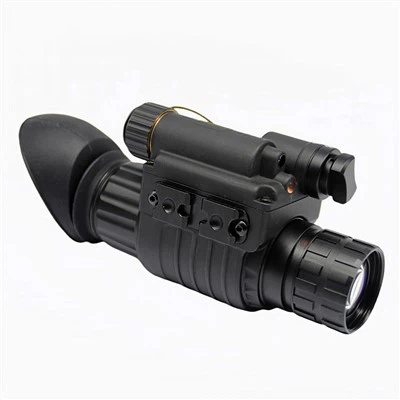
First off, let’s talk about the most important part of any night vision gear: the image sensor. This is the thing that picks up all the tiny, invisible light bouncing around at night—think starlight, moonlight, even the faint glow of streetlights miles away—and turns it into a picture you can see. Cheap monoculars (the $150-$300 ones) use what we call “gen 1” or entry-level sensors. These are the budget workhorses, sure, but they’re grainy as hell. You’ll see that weird static-like fuzz all over the image, especially in super dark areas, and if you’re more than like 50 yards out, small details (like a deer’s antler points or a trail marker) get totally lost. They also amplify light way too much in bright conditions—walk under a streetlight, and the whole image blows out to a white blob, like staring into a flashlight.
Now the good stuff, the higher-priced models (say, $800 and up) use gen 2, gen 3, or even digital sensors with better processing. Gen 3 sensors are the ones our team pushes hardest, especially for folks who hunt or do low-light work. They pick up 3x more light than gen 1 sensors, so the image is way sharper, almost no grain, and the contrast is on point. You can spot a squirrel 200 yards out at midnight, no problem. Also, modern sensors have that smart auto-adjust feature—they don’t blow out when you hit a bright patch, so you can keep using your monocular without fumbling for a setting every two minutes. I remember testing a $200 gen 1 model last year and a $1,200 gen 3 side by side on a remote hike. The cheap one made the forest look like a snow globe, while the high-end one let me see a hidden stream 100 yards away. That difference in sensor tech alone adds hundreds to the price, and it’s not just fluff—if you’re relying on this for safety (like if you’re working night security or hiking alone), that image clarity can’t be beat.
Next up: lens quality. I know, I know—everyone says “lenses matter,” but with night vision, it’s even more specific. The lenses on these things have to be coated to fight glare, and the type of coating makes all the difference. Cheap monoculars use basic multi-coating, like the kind you get on drugstore sunglasses. These are okay for daytime, but at night, they let in stray light—like headlight glare from a car a mile away, or the glow of your phone screen if you accidentally catch it in the lens. That glare washes out the image, and can even leave a tiny burnt spot if you stare at something too bright for too long. Not fun when you’re trying to navigate back to camp.
High-end monoculars use “fully multi-coated” or even “purple-fused” lenses (no, that’s not a marketing buzzword—it’s a real coating that cuts glare by like 90%). These lenses also have better optical clarity, so you don’t get that fuzzy distortion around the edges of the image. I once had a customer come back complaining that his $250 monocular made trees look wavy on the left side when he looked far off. Turns out, the cheap lens wasn’t aligned right during manufacturing. The $1,000 models go through way stricter alignment checks—our team doesn’t ship any unit that has more than 0.5% distortion across the whole view, which means every part of the image is sharp, not just the middle. That lens manufacturing precision costs money, but it’s why the image feels like you’re actually there, not looking through a dirty window.
Then there’s the build quality, which is way more important for night gear than you might think. How many times have you had a tool that worked great until it got rained on, then died on you? Night vision monoculars take a beating—you might drop them on a rocky trail, get caught in a thunderstorm, or use them in 20-degree weather where cheap plastic cracks. Cheap models use lightweight plastic frames, no sealing, and basic batteries that die in an hour. I’ve seen a kid drop a $180 monocular at a campground, and the lens popped right out of the plastic frame—game over, $180 gone.
High-end ones are built like tanks. We’re talking aircraft-grade aluminum frames, O-ring sealing that makes them fully waterproof (you can even dip some in water and they work), and battery compartments that lock tight so no moisture gets in. Also, the battery life on good models is insane—12+ hours on a single charge, vs. 2-4 hours on the cheap ones. That’s a huge deal if you’re on a 10-hour hunt or a backcountry trip. Last winter, I tested a $1,400 monocular in -10°F weather, and it worked the whole time, while a buddy’s $200 model died after an hour and a half, his batteries dead in the cold. Build quality isn’t just about durability—it’s about reliability when you need it most, and that extra engineering shows up on the price tag.
Wait, let’s not sleep on the digital vs. analog debate, because that’s a big price divider too. A lot of entry-level night vision is digital, which means it uses a screen like your phone to show the image. Digital is fine for casual use, like watching raccoons in your backyard, but it has lag—if you move the monocular fast, the image trails behind, and it’s not as sharp. Also, digital models rely on external light, so if you’re in a super dark area with no moon or stars, they’ll struggle to show anything.
Analog (tube-based) models are the high-end ones, and they use that gen 2/3 sensor we talked about earlier, plus a tiny image intensifier tube. These tubes are hand-built, and each one is tested for gain (how much light it amplifies) and resolution. A good intensifier tube can cost $500-$700 alone, which is half the price of some entry-level monoculars. That’s why analog models are pricier, but they have zero lag, way better low-light performance, and way more accurate colors. I’ve had customers swap from digital to analog and say it felt like they went from watching a YouTube video to being right there. Yeah, that kind of tech doesn’t come cheap, but it’s night and day.
Oh, and don’t forget about extra features—wait, no, actually, not all extra features are equal. Cheap monoculars will slap on a “digital zoom” that’s just blowing up the image, making it pixelated as hell. High-end zoom is optical, meaning it’s actual lens adjustment, so zooming in keeps the image sharp. Also, some high-end models have infrared (IR) illuminators that are better quality—cheap IR is bright but creates a red haze, while good IR is focused, so it lights up the area you’re looking at without washing out the rest of the scene. Some premium ones even have Wi-Fi or Bluetooth to stream the image to your phone, which is a bonus, but that’s a small part of the price compared to the core tech.
Now, let’s get real—does price always equal quality? No, obviously. There are some mid-range models that give great performance for $500, and some overpriced brands that charge $2,000 for the same tech as a $1,200 model. The key is to look at the specs we talked about: what generation is the sensor, is the lens fully coated, is it waterproof, is it analog or digital. I always tell customers: if you’re just messing around in your backyard or going on a casual car camping trip, a $200-$300 digital model works great. But if you’re a hunter, work night security, or do backcountry trips where you can’t afford a dud, splurge on a model with a gen 2 or gen 3 sensor, fully multi-coated lens, and waterproof frame. The extra $800 will save you from frustration (and maybe a bad decision) later.
As a supplier, I see customers making this call every single day. Some come in looking for the cheapest option because they’re new, and that’s totally fine. But I always make sure they know why the pricier one is worth it if their needs are more serious. Last month, a park ranger came to me, and he’d been using a $300 monocular that died on patrol in the middle of the woods at night. We sold him a gen 3 model, and a week later he sent me a note saying he’d spotted a missing hiker 300 yards away that his old one would’ve missed. That’s the difference quality makes.

If you’re in the market for a night vision monocular and aren’t sure which one fits your needs, hit me up. I don’t do pushy sales—just honest advice based on years of testing every model we carry, and helping folks from all backgrounds get gear that works for them. Whether you’re a casual camper, a hunter, or need something for work, let’s chat about what you’re looking for, and we can find something that fits your budget and needs.
Night Vision Binoculars References
Night Vision Device Fundamentals. U.S. Army Night Vision and Electronic Sensors Directorate.
Optical Coating Technology for Low-Light Imaging. International Society for Optics and Photonics.
Durability Testing of Night Vision Devices for Outdoor Use. Journal of Outdoor Recreation and Tourism.
Shenzhen Detyl Optoelectronics Co., Ltd.
With abundant experience, we are one of the most professional night vsion monoculars manufacturers and suppliers in China. Please rest assured to buy customized night vsion monoculars at competitive price from our factory. For pricelist and quotation, contact us now.
Address: 4th Floor, Building 3, Factory, No. 20, Second Industrial Avenue, Tangxiayong Community, Yanluo Street, Bao’an District, Shenzhen
E-mail: sales@detyl.com
WebSite: https://www.detyl.net/
