As a wave spring supplier, I often get asked about how to test the performance of these nifty little components. Wave springs are unique because they provide a high load capacity in a small space, making them ideal for a wide range of applications. In this blog, I’ll share some practical ways to test the performance of wave springs. Wave Spring

Static Load Testing
One of the most basic tests is static load testing. This involves applying a fixed load to the wave spring and measuring its deflection. You’ll need a few tools for this test: a load cell, which is basically a device that measures force, and a micrometer or a dial gauge to measure the displacement.
First, place the wave spring on a flat and rigid surface to ensure accurate results. Then, slowly apply the load using the load cell. You can do this manually with a press or use a more automated testing machine if you have one. As you increase the load, keep an eye on the deflection using the micrometer or dial gauge.
Record the load and the corresponding deflection at different intervals. This data will help you create a load-deflection curve, which is a visual representation of how the wave spring behaves under load. A well-performing wave spring should have a linear load-deflection relationship within its designed operating range. If the curve deviates from linearity, it could indicate a problem with the spring’s material or manufacturing process.
Fatigue Testing
In real-world applications, wave springs often experience cyclic loading, which means they are repeatedly loaded and unloaded. Fatigue testing is crucial to ensure that the wave spring can withstand these cyclic loads without failing.
To conduct a fatigue test, you’ll need a fatigue testing machine. This machine is designed to apply a specific load at a set frequency to the wave spring for a predetermined number of cycles. The frequency and the number of cycles depend on the intended application of the wave spring.
During the test, monitor the wave spring closely for any signs of damage or failure. This could include cracks, breaks, or a significant change in the spring’s performance. If the wave spring fails before reaching the specified number of cycles, it may not be suitable for the application.
It’s also a good idea to take periodic measurements of the spring’s deflection and load capacity during the fatigue test. This will allow you to track any changes in the spring’s performance over time and identify potential issues early on.
Dimensional Testing
The dimensions of a wave spring are critical to its performance. Even a small deviation in the diameter, height, or thickness can affect how the spring behaves under load.
For dimensional testing, you can use a variety of measuring tools, such as calipers, micrometers, and optical comparators. Start by measuring the outside diameter, inside diameter, and height of the wave spring. Make sure to take multiple measurements at different points around the spring to ensure accuracy.
Next, check the thickness of the spring material. This is especially important because the thickness directly affects the spring’s load capacity. Use a micrometer to measure the thickness at several locations along the spring.
Compare your measurements to the specifications provided by the design or manufacturing drawings. Any significant deviations could indicate a problem with the spring’s manufacturing or quality control.
Material Testing
The material used to make the wave spring has a big impact on its performance. Different materials have different properties, such as strength, elasticity, and corrosion resistance.
One common material test is the hardness test. Hardness is a measure of a material’s resistance to deformation. You can use a hardness tester to determine the hardness of the wave spring material. This test is relatively quick and easy to perform, and it can give you valuable information about the material’s quality.
Another important material test is chemical analysis. This involves analyzing the chemical composition of the spring material to ensure that it meets the required specifications. You can use techniques such as spectroscopy or X-ray fluorescence to perform chemical analysis.
If the wave spring is exposed to harsh environments, such as high temperatures or corrosive chemicals, you may also want to conduct additional tests to evaluate its resistance to these conditions. For example, you can perform a salt spray test to assess the spring’s corrosion resistance.
Assembly and Function Testing
Finally, it’s important to test the wave spring in its actual assembly or application. This will allow you to ensure that the spring fits properly and functions as intended.
Start by installing the wave spring in the assembly according to the manufacturer’s instructions. Make sure that all the components are properly aligned and tightened. Then, apply the appropriate load or movement to the assembly and observe how the wave spring behaves.
Check for any signs of interference, such as binding or rubbing, between the wave spring and other components. Also, make sure that the spring provides the expected load capacity and deflection. If you notice any issues during the assembly and function testing, you may need to make adjustments to the spring or the assembly design.
Conclusion
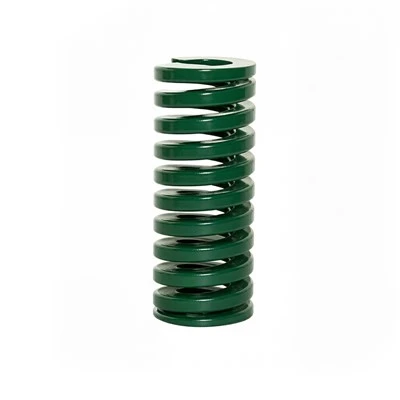
Testing the performance of a wave spring is a multi-step process that involves a variety of tests. By conducting these tests, you can ensure that the wave spring meets the required specifications and performs reliably in its intended application.
Extension Spring If you’re in the market for high-quality wave springs and want to learn more about our products or discuss your specific requirements, don’t hesitate to reach out. We’re here to help you find the perfect wave spring solution for your needs.
References
- Spring Manufacturers Institute Handbook
- Material Science and Engineering textbooks
- Industry standards for spring testing and manufacturing
Shengzhou Deyuxiang Hardware Accessories Co., Ltd.
We are one of the most professional wave spring manufacturers and suppliers in China, also support customized service. With abundant experience, we warmly welcome you to buy high quality wave spring made in China here and get pricelist from our factory. For price consultation, contact us.
Address: No. 38, Caosheng Road, Caoqiao Street, Pinghu City, Jiaxing City, Zhejiang Province
E-mail: 877286126@qq.com
WebSite: https://www.dyx-spring.com/
